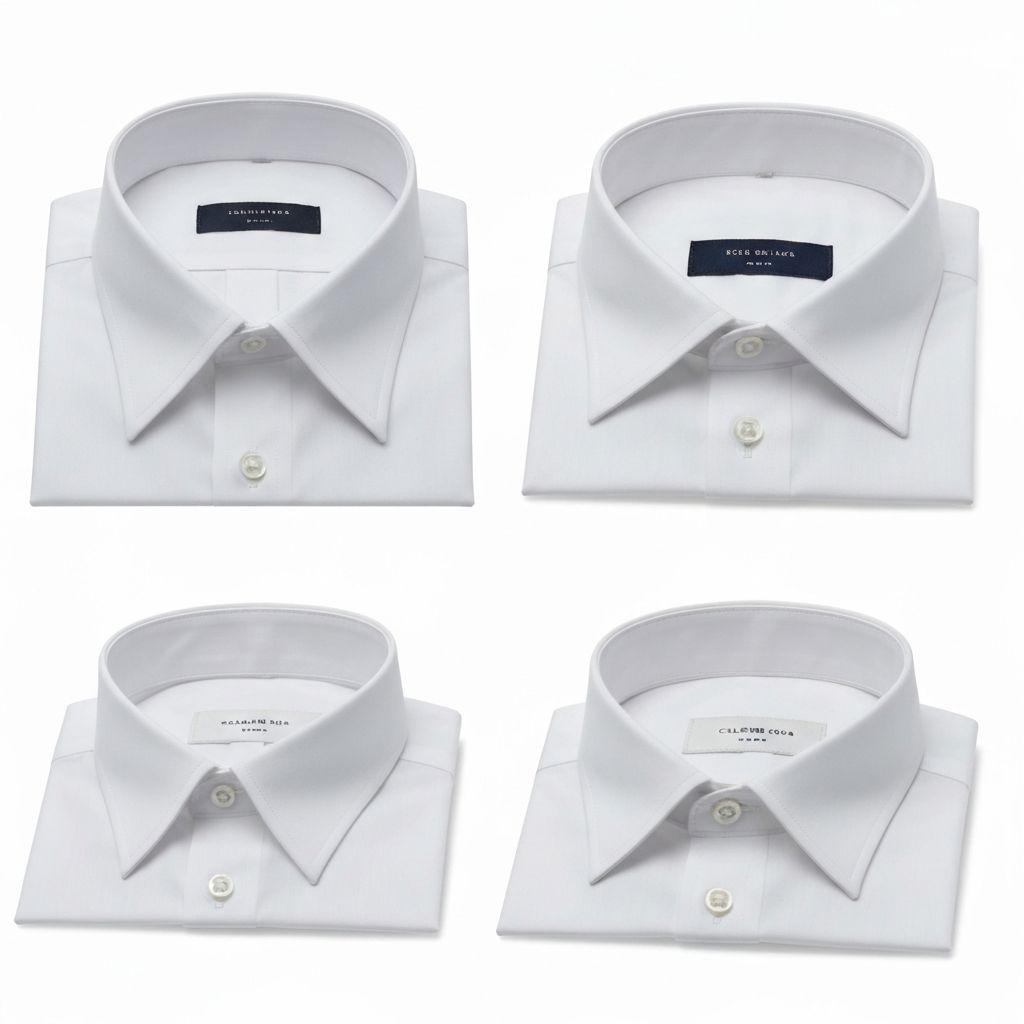
A jacket can hide a hundred small faults. A shirt cannot. The collar sits against your face, the cuff finishes at your wrist bone, and the man across the desk is close enough to see the yoke pull when you reach for a file. It is also the garment you wear four or five days a week, which is why a first shirt commission teaches a client more about his posture than his first suit did.
What a shirtmaker measures that a suitmaker does not
The collar is the whole argument. Measure it at the base of the neck, not around the middle of the throat. Two fingers should pass behind a fastened collar; one means it chokes you by four in the afternoon, three means the points lift off the chest and the collar looks borrowed. Most men wear a collar one size too large for years because that is what was on the rack.
Then neck and shoulder slope, shoulder asymmetry, chest, waist, seat. Shirt length is measured to a point on the seat so the shirt stays tucked when you sit, not when you stand. Sleeve length is taken on a slightly bent arm; a straight-arm measurement gives a cuff that rides up the moment you reach forward. Cuff width is measured over the watch you actually wear. All of it goes on a permanent profile, so a second order three years later starts from your body, not a form.
Collar shape: for a tie, and for no tie
Four shapes cover nearly every man here.
- Classic point. The safest collar there is. Close points flatter a narrow or long face and hold a small knot neatly. Slightly conservative, which in a law firm is not a criticism.
- Spread. Wider points leave room for a four-in-hand or half-Windsor without the knot swallowing the collar. Most of our clients order this one in multiples: it works with a tie on Monday and open at the neck on Friday.
- Cutaway. Very wide points, cut to sit under the lapel. Unresolved with a narrow knot, deliberate with a wide one or no tie. Order one, not five.
- Button-down. The points fasten to the body, so the collar stays put in wind and in a taxi with the window down. Informal by origin, fine under a soft jacket with no tie, wrong under a worsted suit with a silk tie.
Collar height separates a good shirt from a cheap one. Too tall and the band stands away from the neck when you turn your head; too short and the collar collapses under a knot. In Hong Kong humidity the interlining matters as much as the cloth: a fused collar goes soft and bubbles at the fold after a couple of seasons of daily wear, so we build collars with a floating interlining that can be replaced.
Cuff: French, barrel, or convertible
A barrel cuff with one or two buttons is the working default: it survives being rolled up, needs no links, and suits anyone who takes his jacket off at his desk. A French cuff folds back on a link, sits cleaner under a double-breasted jacket or a dinner suit, and needs a slightly longer sleeve so the fold lands at the wrist bone rather than above it. A convertible cuff has buttonholes on both faces, so one shirt does either job, which makes it sensible for a first order or for travel.
Whatever the style, the finished cuff ends at the wrist bone and shows about a centimetre below the jacket sleeve. Two centimetres of cuff showing means the shirt is too long; none means the jacket sleeve is.
Cloth: what survives a Hong Kong week
Egyptian cotton, Italian poplin, Swiss twill and royal oxford all appear in our shirt book. The names describe yarn and weave more than quality; what matters is weave, weight and finish.
- Poplin. Smooth, tight plain weave, usually 2-ply 100s to 140s. It takes a crease at the elbow by mid-morning and looks sharp again after a press. The correct city shirt under a suit, and the best surface for a tie knot.
- Royal oxford. Basket weave, visible texture, more body. Resists creasing better than poplin, reads softer and less formal, wears warmer: a good October-to-March shirt and an excellent open-collar one. In July it is too much.
- Twill. A diagonal weave with a dry hand and good drape. Slightly warmer than poplin, forgiving of a long day, and the cloth we suggest for clients who travel and cannot press a shirt in a hotel room.
Weight is the number to ask about. A summer shirt here wants roughly 100 to 120 grams per square metre; a year-round shirt sits at 120 to 140; a heavier oxford runs 140 to 160 and counts as winter here. Below about 100 grams, white poplin goes transparent enough to show a vest, which is why a very light white shirt is often a worse buy than a medium-weight one. White and pale blue hide perspiration badly; ecru, hairline stripes and small checks hide it well. Non-iron finishes are resin, and resin cracks at the collar fold before the cotton wears out.
Details worth paying for, and details that date
Buttons: mother-of-pearl or horn, thick rather than flat, sewn with a shank so the cloth is not pinched. Ask for spares; a shirtmaker who does not offer them is not planning for four years of wear.
A monogram is best kept inside the yoke or the inside of the cuff. On the chest it is a signature; inside it is a private mark, and in a meeting room the difference matters. Contrast collars and cuffs, white on a blue body, exist partly because collars and cuffs soil and fray first, so a laundry can replace them without touching the body. They also carry a period accent, and a tonal shirt with a well-cut collar reads more expensively in most Hong Kong boardrooms.
How many shirts for a first order
One shirt is a test, not an order, and it buys you a second cycle of fittings for a garment that wears out in three years. Three is the sensible minimum: white poplin, pale blue, and one in a different weave or small pattern, so you can judge the collar on a Tuesday and the cloth on a Saturday. Wear them a month, note where the yoke pulls, then order six or eight in the corrected pattern.
The arithmetic of rotation matters. A shirt worn once, laundered and rested two days lasts far longer than the same shirt worn twice a week. For a five-day week, eight to ten shirts in rotation is not extravagance; it is the difference between replacing a wardrobe every three years and every eight. What we discourage is ten identical whites on a first commission: you learn nothing about your own preferences, and leave no room to correct a collar a centimetre too tall.
Where the shirt sits in the wardrobe
Most clients come for shirts after their second suit, when they notice an expensive jacket over a tired collar still looks expensive and tired. Starting from nothing, the suit comes first, because the shirt is cut to sit under a specific shoulder and lapel; see our bespoke suits. With suits already in the wardrobe, the shirt is the fastest visible improvement, and the one you feel daily rather than twice a week.
Shirts are measured in the same room, on the same profile. Our bespoke shirts begin with a 60-minute consultation; the fitting sequence is on our process page. Book a fitting at our Tsim Sha Tsui atelier and bring a shirt whose fit you already know, even a bad one. It tells the cutter more than a description.