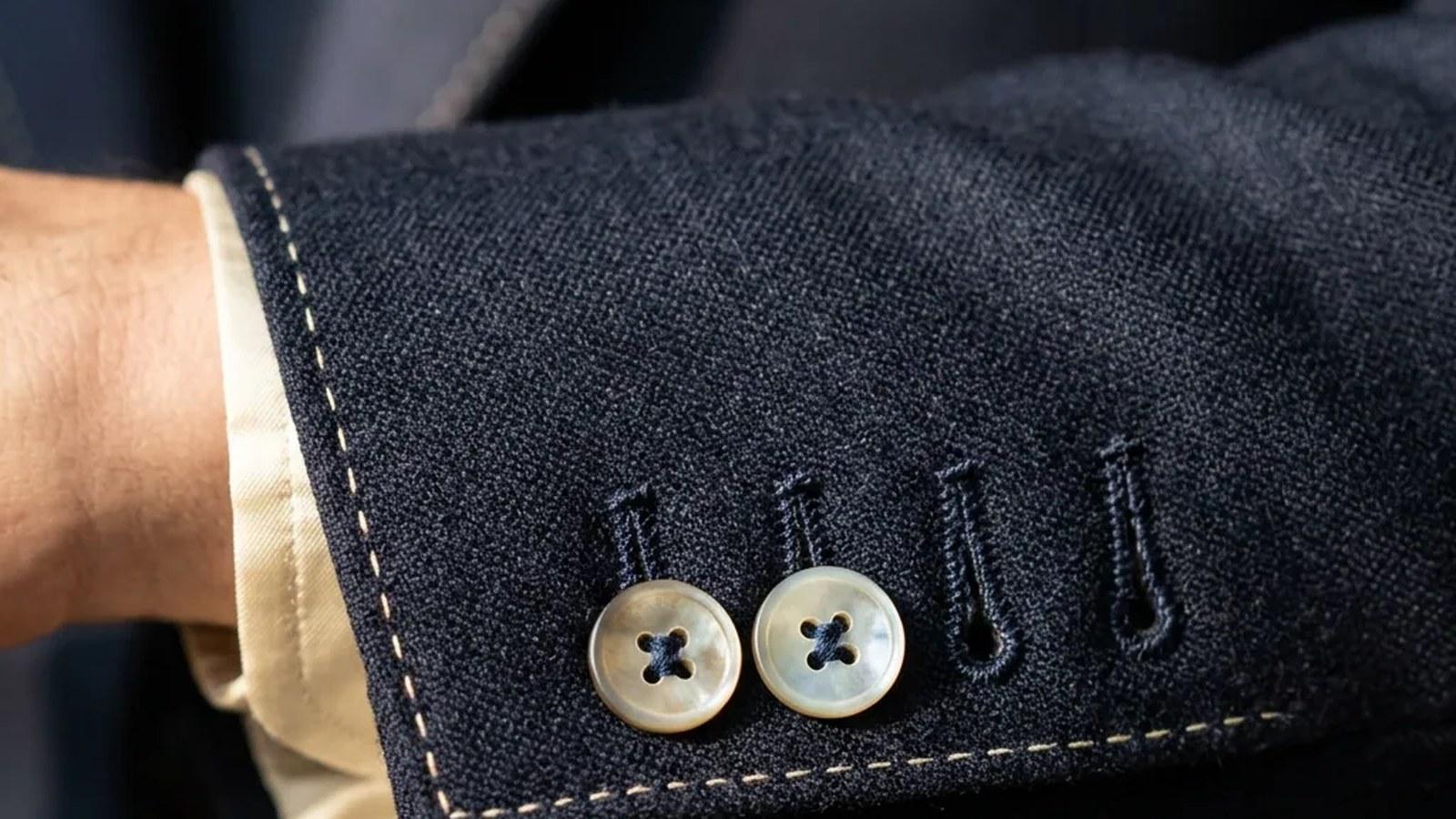
A bespoke suit is a six-to-eight-week commission, not a purchase: more than thirty measurements, a paper pattern cut for one body, at least one baste fitting, and fifty to seventy hours of hand work. The price follows the cloth and the construction, and it is quoted after we have seen you.
How do you tell real bespoke from a shop that only alters?
Many Hong Kong shops use the word loosely. Ask three questions. Will the cutter draw a paper pattern for me? At the first fitting, is the jacket still unfinished, without lining? Is the chest floating canvas or fused?
An alterations shop takes a factory block and adjusts it. That can fit well, but it is not the same work and should not carry the same price. Ask who cuts the suit and whether the same fitter sees you from measurement to collection. At our Tsim Sha Tsui shop, open since 1962, the fitter follows the whole commission.
What does a bespoke suit cost, and where does the money go?
Four things make up the quote: cloth, hand hours, construction, and fittings. Cloth depends on the mill and the yarn; Zegna and Loro Piana sit above a standard Italian bun. Hand hours are real, fifty to seventy per suit, and most of them are invisible. Construction covers the floating canvas, hand-sewn lapel, sleeves set by hand, and hand-worked buttonholes. Fittings cover the first baste and the second, with a third when the shoulders are difficult.
A low quote usually removes one of these, most often the fittings or the canvas. Ask for the cloth name and the construction in writing. The same style in a different cloth can move the price a long way. Do not compare a fully canvassed, hand-cut suit with a fused factory garment on price alone; they are not the same object.
How long does it take, and what happens in those weeks?
True bespoke runs six to eight weeks. The first week is the consultation, measurements and cloth. Then the pattern is drawn and the cloth cut. Two or three weeks later you return for the baste fitting. After that the suit is taken apart, corrected, and tried again before the lining goes in, the buttonholes are worked and the garment is pressed. Made-to-measure is faster, three to four weeks.
If someone promises a hand-cut, hand-fitted suit in a week, it is probably neither. If you are flying in, plan around the baste fitting, because it has to happen on your body.
What happens at the first consultation?
The first visit is a private sixty-minute session with tea or coffee, and it is not a sales pitch. We ask what the suit is for, how often you will wear it, what you carry in the pockets, and how you sit during the day. A wedding suit and a working suit need different shoulders. Only then do we measure.
You do not need the vocabulary. Bring the shirt and shoes you will wear with the suit, because sleeve length and trouser break are judged against them. We look at you standing and again sitting down.
Why does posture matter more than the tape measure?
More than thirty measurements go on the sheet: neck, chest, back length, armhole, rise, shoulder slope, and the angle of the hem. The tape gives numbers; the notes beside them explain the numbers. Most people have one shoulder higher than the other, a rounded upper back, a waist tipped forward or a pelvis tucked under. Years at a desk in Hong Kong leave many men with the head carried forward and the shoulders rolled in.
If the pattern does not correct for that, the jacket looks excellent on the hanger and hollow at the collar once worn. We record the correction in your profile, so a second commission starts from the last one rather than from zero.
Which cloth weight works in Hong Kong?
Ask when you will wear it before you ask about colour. For a Hong Kong summer, a wool around 250–280g is the practical choice: it breathes and still hangs. For winter, or for a suit that travels to a cold city, 320g and above holds a cleaner line. In the wettest months, an open weave or a hopsack is more comfortable than a tightly woven worsted.
Super 150s and 180s describe yarn fineness, not durability. A suit worn five days a week does not need the highest number on the bun. Our library holds several thousand cloths from Zegna, Loro Piana, Scabal, Holland & Sherry and Vitale Barberis Canonico, among others. Settle the weight and the weave first, then the colour.
What is a hand-cut paper pattern?
The pattern is drawn from your measurements on blank paper, not taken from an existing block and adjusted. Shoulder slope, back curve, asymmetry and stance all go into it. The cloth is cut with the grain, and stripes and checks are matched across the pocket flaps, lapels and seams. Poor matching is visible from across a room.
This is the least visible part of the work and the part that decides whether the jacket holds its shape and sits at the collar. The pattern is yours and stays on file; when your body changes, we change the pattern.
Why is the baste fitting the last chance?
A baste is a half-made garment held together with loose stitches: no lining, the collar and sleeves only tacked in place. At this stage the shoulder line, collar, armhole and back can still be changed.
Once the lining is in, the canvas is secured and the buttonholes are cut, a poor fit is a remake, not an alteration. Come to the fitting in the shirt and shoes you will wear, then walk, sit and reach. We watch how the cloth moves, not only how it looks standing still. The garment is opened up, the pattern corrected, and you try it again; a difficult shoulder may need a third fitting.
What should you check when you collect?
Wear it once more in the shop. Walk, sit, raise your arms. The collar should sit against the neck, the sleeve should show half an inch of shirt cuff, the trouser should break once on the shoe, and the pockets should lie flat. Ask which areas can be altered later and which cannot; the shoulder and collar are fixed once finished.
Between wears, brush the suit and hang it on a broad hanger, and give it a day to rest. Do not dry-clean it often.
To see the cloth, ask about price and be measured, book a fitting at our Tsim Sha Tsui atelier. The session takes an hour and there is no obligation to order. Start with our bespoke suits, read the full process, or contact us to arrange a time. We are on Hankow Road, one minute from The Peninsula.