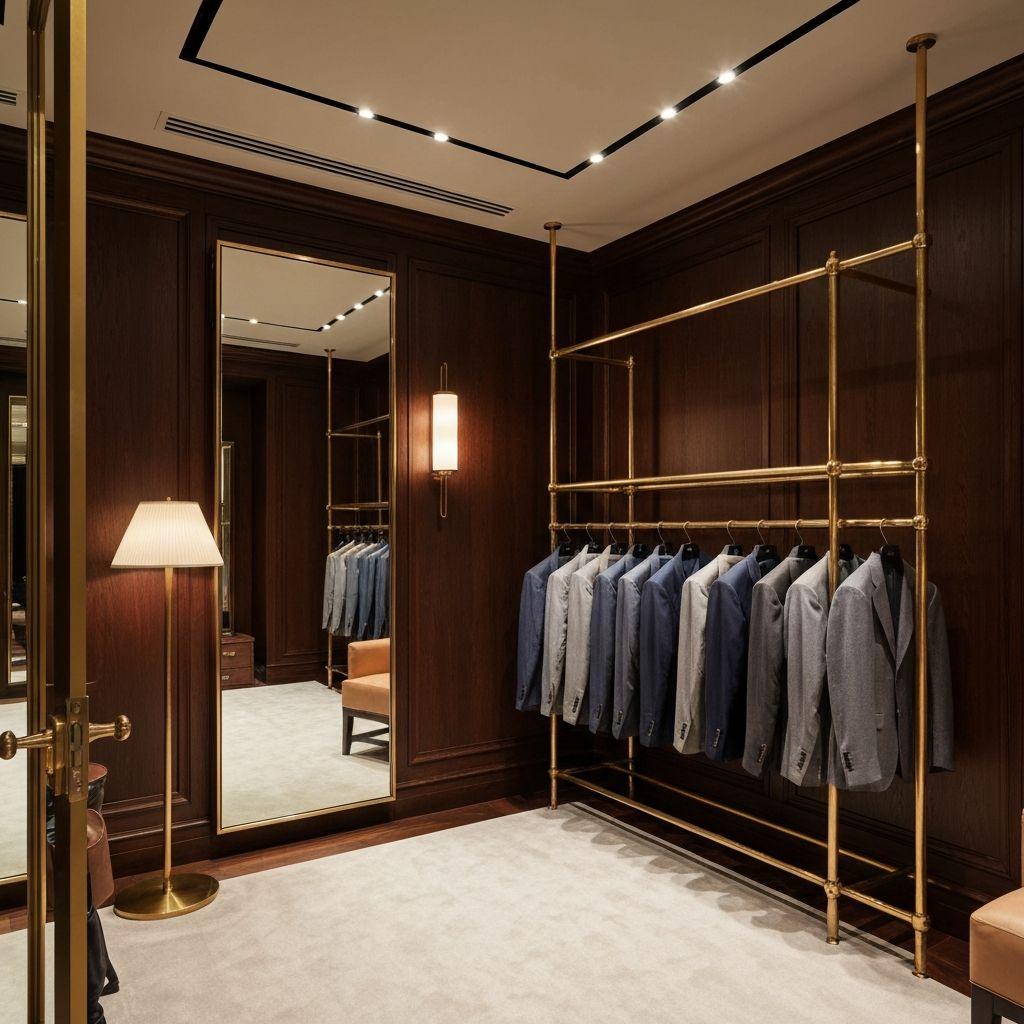
Two outfits, not four. A Hong Kong wedding asks the groom for a day look and an evening look; the send-off is the evening look again, usually without the jacket. Anything past that is normally a rental decision rather than a reason to commission a third suit.
The useful question is not how many suits a groom can justify, but which two he will still wear in three years — and which parts of the day the photographs will actually record.
How many outfits does the day really need?
Break the day into what the camera sees. There is the tea ceremony in the morning, at home or in a hotel suite, where the room is warm and everyone is standing. There is the ceremony itself, civil or church, usually late afternoon. There is the banquet, which runs into the evening under artificial light and flash. Then there is the send-off at the door, which lasts ten minutes and happens after everyone has had a drink.
That is two distinct lighting conditions and two distinct levels of formality, so two outfits carry it comfortably. Three is a styling decision. Four is a wedding-planning decision that has stopped being about clothes.
Which of the two is worth commissioning?
Commission the one you will wear again. For most grooms that is the day suit: a navy or charcoal in a cloth around 250 to 280 grams, which is the weight that survives a Hong Kong afternoon without showing every crease. It goes to the tea ceremony, it goes to work afterwards, it goes to other people's weddings for the next decade.
Rent the one you will wear once — or commission it if black tie is genuinely part of your life. A dinner jacket earns its cost when you have an annual gala, a black-tie wedding every second year, or a job where evening events are normal. If the answer is "this one night", rental is the honest answer, and we will say so.
What actually changes between the two looks?
- Cloth weight. Day cloth can be light and dry; evening cloth wants a little more body, because flash picks up every wrinkle in a thin worsted.
- Depth of colour. Mid navy reads friendly in daylight and flat at night. The evening suit wants a deeper navy or charcoal, or black if it is a dinner jacket.
- Lapel. Notch for the day suit. Peak or shawl for the evening, depending on whether it is a suit or a dinner jacket.
- Shirt. A point or turn-down collar in the afternoon; a marcella front and a bow in the evening, if you are going black tie.
- Neckwear. A tie at the ceremony, a bow at the banquet. Not both, and not a long tie with a dinner jacket.
Should the groom match the groomsmen?
No, and identical suits are the reason so many wedding photographs look like a corporate team photo. Give the party a direction instead: one tie, one pocket square, one shade. Keep your own suit a step away from theirs — a darker navy, a different lapel, a waistcoat they do not have.
If the groomsmen are renting, ask them to rent in the same cloth family rather than the same suit. A slightly different blue in the same weight photographs as a group; two different weights photograph as two different colours under flash.
What about the tea ceremony?
Same suit, lighter shirt, jacket off by the second hour. The room is warm, the tea is hot, and there are forty people in it. This is the part of the day where a 250-gram cloth earns its keep and a 400-gram flannel becomes a mistake.
A bride dressed in a traditional kwa will photograph beautifully against a dark suit. You do not need a second outfit for the morning; you need a suit that does not make you sweat through it.
How far ahead should you book?
Six to eight weeks for a true bespoke commission, three to four weeks for made to measure. Peak season in Hong Kong runs from October to December and again in March, when every atelier in Tsim Sha Tsui is full, so add a fortnight if you are marrying in those months.
Two fittings is the minimum for a commission: the baste, where the shape is still changeable, and the second fitting, where the shoulders and the length are settled. Book the final collection about ten days before the wedding, not the day before. Bodies change in the last week — water, salt, sleep — and a suit collected the morning of the ceremony has no room left to be adjusted.
What do grooms most often get wrong?
- Commissioning four looks and wearing each one for forty minutes.
- Choosing a cloth for the photograph rather than for the room. Flash on a thin, slightly shiny worsted is unforgiving at 9pm.
- Buying the shoes after the trouser hem is set. The break is set against the shoe, so the shoe comes first.
- Forgetting the inside pocket. Rings, vows and a handkerchief all need somewhere to live.
- Treating the shirt as an afterthought. A collar that sits badly ruins a good jacket faster than a crease does.
What does commissioning give you that renting cannot?
A fitting profile that stays with us: your measurements, your posture, the shoulder that sits lower than the other. The next commission starts from that file rather than from a tape measure. The suit can also be altered later as you change, because the cloth and the seams are yours.
Renting gives you one evening in a garment cut for an average body, pressed for the last person who wore it. That is a fair trade for one night and a poor one for a decade.
If you are planning a wedding and want to see the difference on your own shoulder, look at what a bespoke suit commission includes, read how the fitting sequence runs, or book a private consultation at our Tsim Sha Tsui atelier through contact.