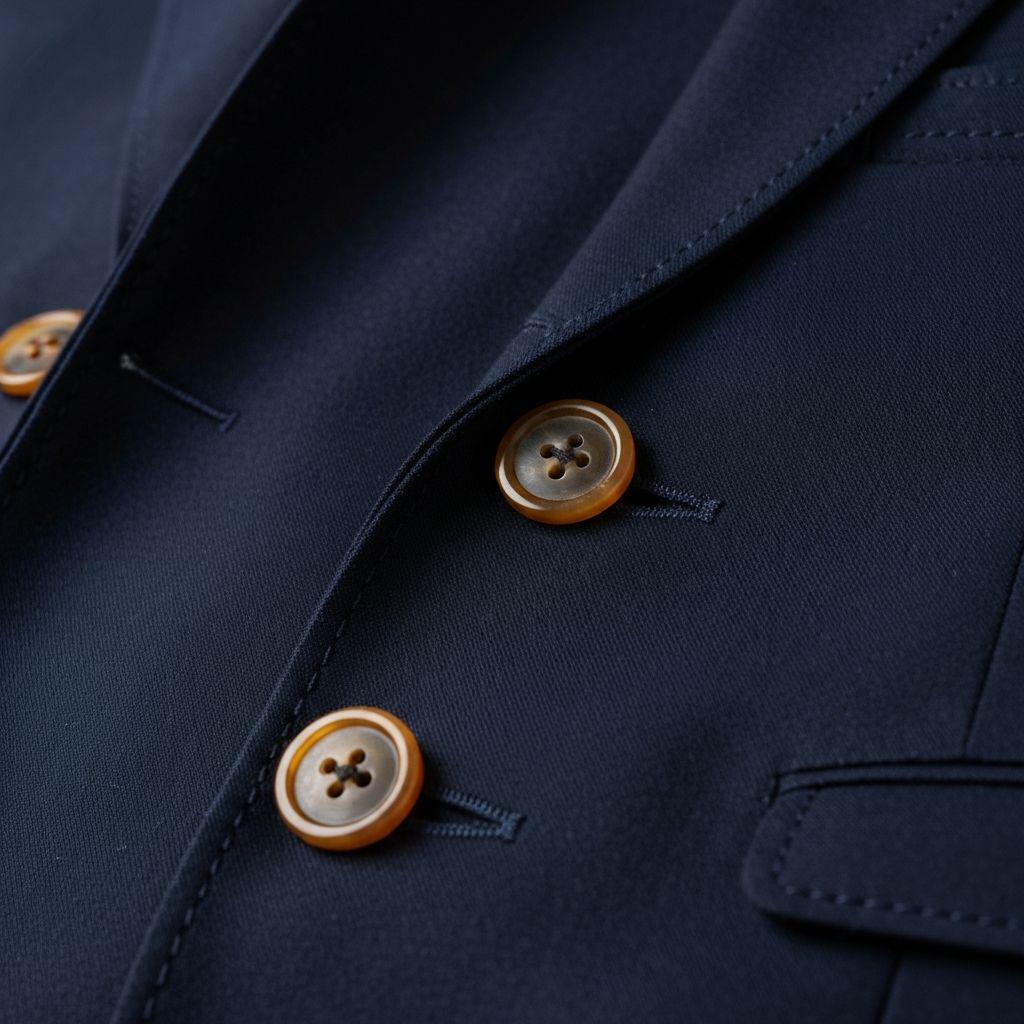
An interview suit is not a style statement. It is a piece of evidence: it tells the person across the table that you understand the room you are asking to join. In Hong Kong, where a single interviewer may see a dozen candidates in a day, they will rarely remember your answer about teamwork. They will remember how you looked when you walked in.
Colour: navy or charcoal, and leave black alone
Black suits go wrong in Hong Kong more often than any other colour. Black is what restaurant managers, security staff, graduation gowns and funerals wear. Wear one to a bank or a law firm and the interviewer may not be able to say what is off, only that you do not look like you belong there. Navy is the safest first-interview choice, followed closely by charcoal, which reads more serious than mid-grey and softer than black. Skip checks, windowpanes and anything with a visible stripe. A faint pinstripe belongs to someone who already has clients. Consulting and hotel interviews are marginally more forgiving than law, but the rule holds: if you are unsure, navy is never wrong and black is never right.
Cloth: matte, not shiny
For a Hong Kong summer, a 250–280g four-season wool is enough. For winter, or for offices where the air conditioning runs hard, 320g and above holds a cleaner line. What matters more than weight is sheen. High-twist Super 150s and above, silk blends and flat polyester all catch fluorescent light and read as uniform from across a lobby. Choose a matte wool twill or a hopsack with a little surface texture: it hides the creases you pick up sitting in a waiting room for twenty minutes.
Fit: close is not the same as tight
The shoulder is the one thing that cannot be fixed later. If the shoulder line drops more than a centimetre past your own shoulder, the jacket is wrong and no alteration will save it. Buttoned, the chest should still take a flat hand. Pull the waist in too far and the button will strain the moment you sit down in a conference room, which is exactly what an interview asks you to do. The sleeve should show about a centimetre of shirt cuff. The trouser hem should just touch the shoe, with one clean break and no accordion folds. Try the jacket sitting, reaching forward and walking, not only standing in front of the mirror. Most interview suits are bought standing up and then worn sitting down for forty minutes, which is why so many of them look wrong by the second question.
Shirt collar and tie width
Nothing clever here. White or pale blue shirt, a spread or semi-cutaway collar, a Windsor knot that fills the collar without a gap at the neck. A tie width of 7–8cm sits well against a lapel of 8–9cm; a 5cm tie is a fashion choice, not an interview one. The tip should reach the belt buckle and stop. Solids, a fine diagonal, or a dark knit are all safe. Cartoons, large logos and high-shine silk are not.
Shoes and belt
A black cap-toe oxford is the default for banking and law. A dark brown derby is acceptable in consulting and hospitality. Belt and shoes should sit in the same colour family, with a plain buckle. Socks should be long enough that nothing shows when you sit, and dark enough to continue the line of the trouser. Polish the shoes. An interviewer may not look at them, but they will notice a scuffed toe or a worn heel faster than they will notice what the suit cost.
Heat and humidity: what actually helps
A half-lined or unlined jacket makes a real difference in a Hong Kong July; the back breathes and you do not arrive with a damp patch between the shoulder blades. A thin cotton undershirt absorbs more than any antiperspirant. Arrive fifteen minutes early and use the washroom to cool down and straighten your collar rather than walking in still sweating. Carry a cloth handkerchief, not tissues. If your day runs long, a spare shirt in the office is worth more than a spare tie. And leave the backpack at home on interview day: it crushes the back of the jacket within one MTR ride.
Three things not to do at a first interview
- Do not wear the suit for the first time. Wear it once beforehand: sit in it, walk in it, eat in it. A jacket that has never been worn will find a way to distract you all morning.
- Do not over-accessorise. Cufflinks, pocket square, tie bar, watch: pick two. A white linen square in a TV fold is fine; a coloured puff is a different occasion.
- Do not borrow a suit. Shoulder, sleeve length and waist cannot be borrowed. It shows, and you will feel it all day.
Work backwards from the date
Interviews come with dates. If you have three or four weeks, made-to-measure is realistic. True bespoke needs six to eight weeks, because the first baste, the second fitting and the final corrections each need time and should not be compressed. You also do not need a full wardrobe for a first interview: one navy bespoke suit and two made-to-measure shirts will carry you through three rounds and the first six months of the job.
We keep a fitting profile for every client — shoulder slope, posture, the asymmetry most people never notice — so a second suit starts from your own measurements rather than from a stock block. Book a sixty-minute private fitting at our Tsim Sha Tsui atelier on Hankow Road, bring your interview date and the role, and we will work backwards from it. A month of lead time makes the whole thing calm; a week does not.