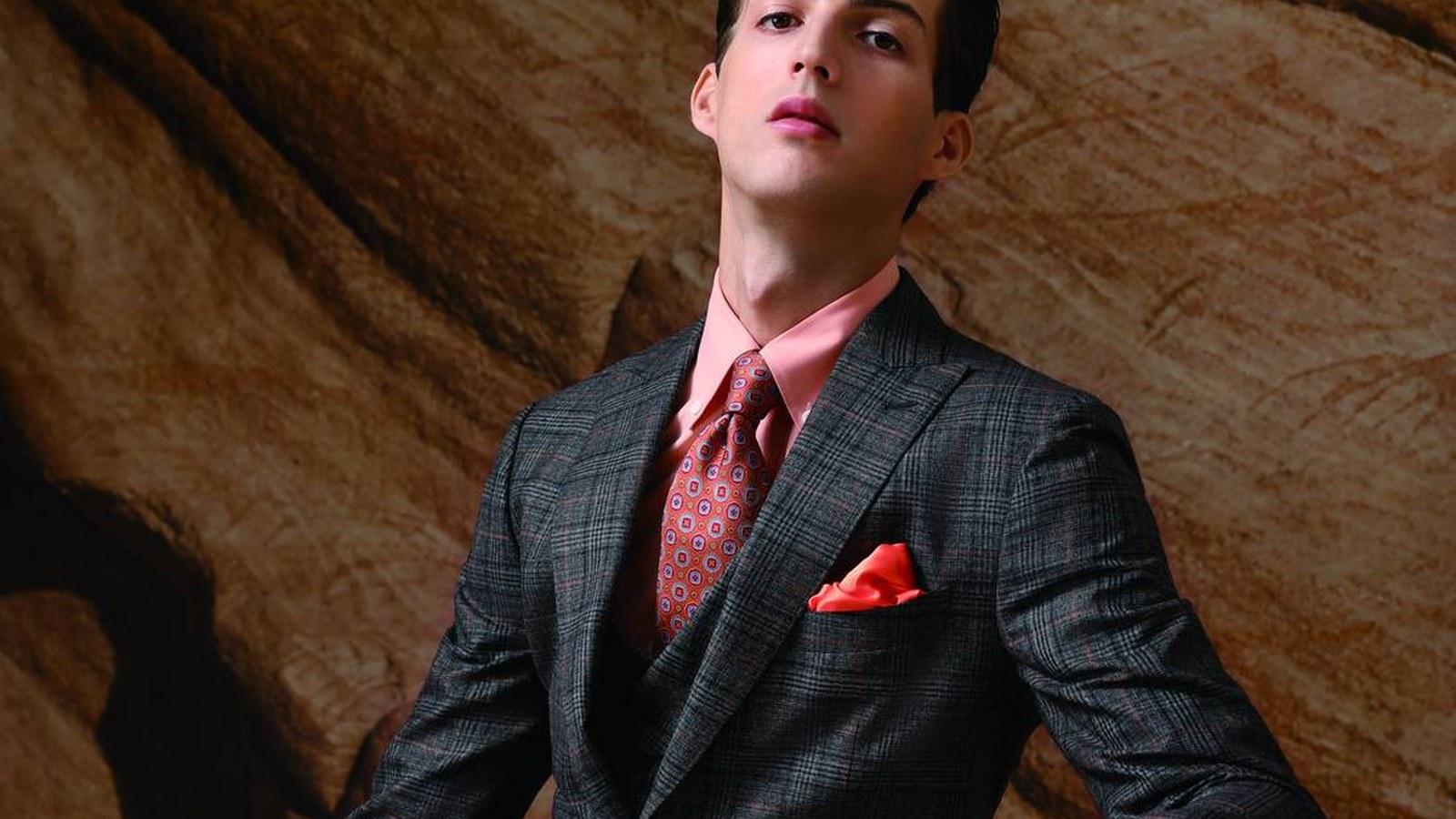
Most suits can be altered at the sleeve, the waist and the hem. Almost none can be altered at the shoulder. If the shoulder seam already sits past your shoulder bone, you are not looking at an alteration — you are looking at a new pattern.
That one line settles most of the questions we get across the counter. Where the line falls, part by part, and how to tell which side of it your jacket is on, is below.
Which suit alterations are routine work?
Sleeve length, waist suppression, trouser hem, trouser waist, taking in the seat of a trouser, shortening a jacket by a small amount, moving buttons, replacing a lining. These all live inside the seam allowance and inside the shape the jacket already has, which is why they can be done without touching the line.
Sleeve length is the one people ask for most and understand least. On a jacket with working buttonholes, you cannot shorten from the cuff end without losing the buttonholes. The sleeve comes off at the shoulder and is re-set, which is a much larger job. On a jacket with decorative buttons, it is a short adjustment. Ask which kind you own before agreeing to anything.
What can no tailor fix on a finished jacket?
- Shoulder width. Narrowing means removing the sleeve, reshaping the armhole and rebuilding the shoulder line.
- Chest and armhole depth. Both are cut into the front panel. Taking them in flattens the curve the canvas was shaped to hold.
- A collar that stands away from the neck. That is usually the wrong shoulder slope, not a loose collar, and it cannot be fixed by tightening the collar band.
- Jacket length, in either direction, beyond a little. The pockets, the button stance and the hem are drafted relative to each other.
- Pattern matching across a seam, once the cloth has been cut at a different point.
None of these is a refusal to work. They are the price of a garment that was drafted for a body other than yours.
Why is the shoulder the dividing line?
The shoulder is where the structure of a jacket begins. The armhole, the sleeve head, the shoulder pad and the floating canvas all meet in that few centimetres. To narrow a shoulder you have to unpick the sleeve, cut the armhole smaller, reshape the sleeve head to fit the new opening, and re-pad the shoulder so it still holds its line.
What comes back is a jacket whose proportions have been redrawn by hand, on a front panel that was cut for a wider frame. Sometimes the result is fine. More often it produces a shoulder that photographs slightly wrong and that nobody can quite explain — the sleeve hangs a little forward, the lapel rolls differently, the chest looks borrowed. That is why an honest tailor will tell you the jacket is the wrong size rather than quote you for the job.
How do you test a jacket before you commit to altering it?
- Shoulder seam. It should end at the edge of your shoulder bone. Past it, the jacket is too wide and no alteration will bring it back honestly.
- Collar. Turn your head left and right. The collar should stay against the neck. A gap that opens as you turn is a shoulder-slope problem.
- Button. Fasten it. If the cloth pulls into an X at the button, the waist was drafted too small or the chest too tight.
- Arms forward. Reach both arms out in front of you. A jacket that rides up with them has too little armhole depth or too much shoulder padding.
- Seam allowance. Feel inside the side seam and the centre back. If the seams are already narrow, an earlier alteration has spent the cloth.
Five minutes in front of the mirror answers more than a fitting can undo later.
When is a new pattern the better answer?
When the jacket is a full size or more off at the shoulder. When the same seam has already been altered once. When the cloth is heavy enough that taking it in hard will leave a mark along the seam. When the occasion is one you only get one attempt at — a wedding, a first appearance in court, an interview where you will be judged in the first thirty seconds.
A commission starts from measurement, not from correction. We take thirty-plus measurements including posture, shoulder slope and the asymmetry almost everyone has between one side and the other, and draft a paper pattern for that body. That is also why a commission takes six to eight weeks and fifty to seventy hours of handwork: nothing is being corrected after the fact.
What do trousers allow that a jacket does not?
Trousers are the forgiving half of a suit. The hem, the waist, the seat and the taper can all move, often by a couple of inches, without the garment losing its character. What cannot move much is the rise and the fork — the crotch depth — because those are cut into the shape.
This is why taking in a trouser waist by two inches sometimes makes the trouser hang worse than before: the waistband comes in, but the fork stays where it was drafted, and the crease starts pulling towards the inside leg. If the waist needs more than a small adjustment, the trouser wants a new pattern too.
The hem is where most men get it wrong, and it is not a measurement so much as a decision. A full break, a half break and no break are three different trousers. Decide with the shoes on your feet, standing, not sitting.
What should you bring to an alteration fitting?
The shoes you will actually wear with the suit, because the hem length is set against the heel height and the toe shape. The shirt you wear underneath, because the collar and cuff show. The jacket you plan to layer under or over it if there is one. And the honest version of your plans — if you intend to lose weight before the wedding, say so, because a waist taken in now will need taking in again.
Tell the tailor what the garment is for as well. A jacket being altered for a wedding photograph and a jacket being altered for a Tuesday meeting are the same jacket with different tolerances.
How long should an alteration take?
Hems, a waist, a sleeve with decorative buttons: usually a few days. A sleeve re-set at the shoulder, or a shoulder narrowed: a week or two, and worth waiting for. If someone offers a shoulder rebuild in two days, ask who is doing it and whether they are the person who will re-pad it.
If you want to see where the boundary sits on your own jacket, our fitting process sets out the sequence from first measurement to final collection. You can also read what a bespoke suit commission includes, or book a fitting at our Tsim Sha Tsui atelier through contact.