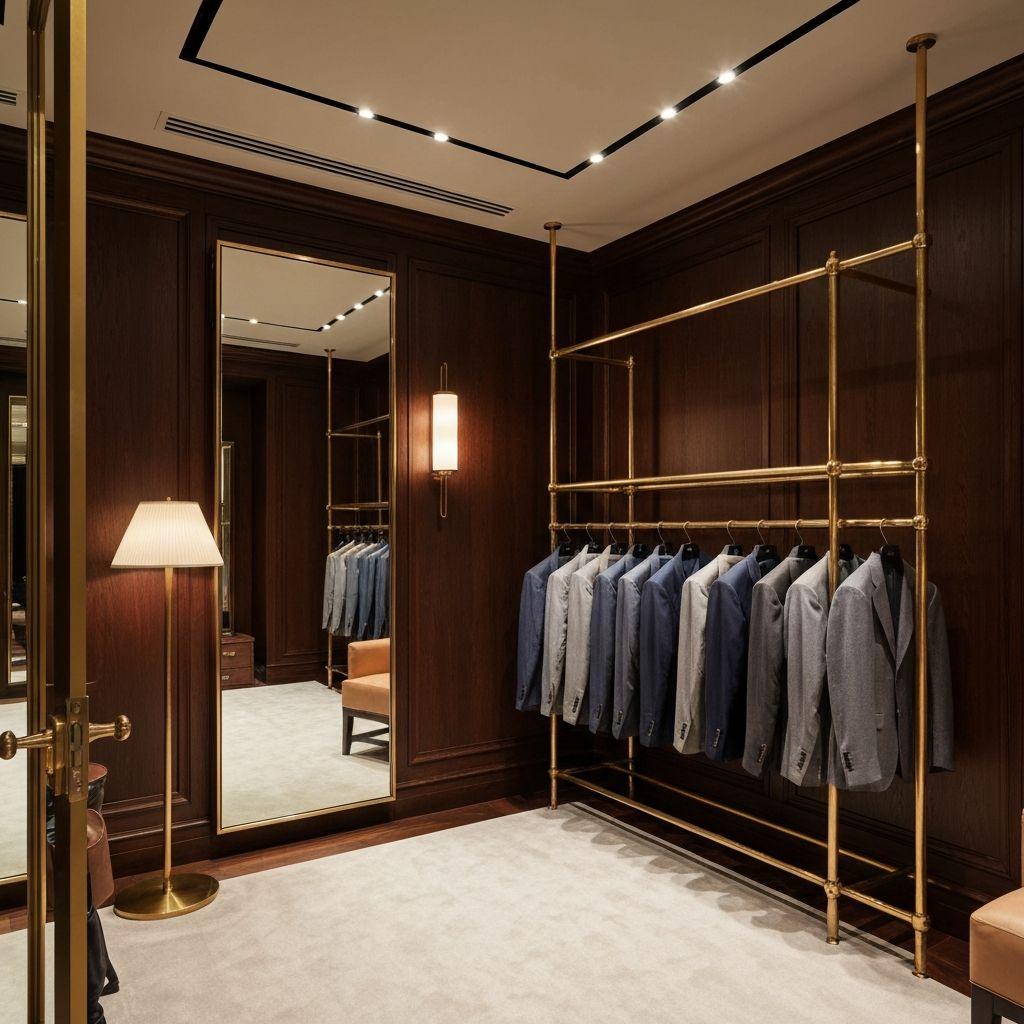
A tailor made suit in Hong Kong can mean three quite different things, and few shops say which one they are quoting. The phrase is not a lie, but it is not a specification either. It covers three different products, and the gap between them is the difference between a suit that fits you this year and one that still fits in ten.
We have been cutting in Hong Kong since 1962 and we work in all three tiers. Here is what each one actually is, and how to tell which one is being sold to you before you leave a deposit.
Three tiers behind one phrase
Ready-to-wear is a finished garment in a numbered size, adjusted after the fact. Made-to-measure starts from an existing block pattern and is altered to your measurements. True bespoke starts from blank paper, a measuring tape, and a cutter who intends to build the garment around your posture rather than around a size chart.
All three can look correct in a photograph. They behave very differently after a year of Hong Kong humidity and eight hours a day in an office chair.
Ready-to-wear: the honest baseline
Off-the-rack tailoring can fix length, waist and, at a push, sleeve. It cannot fix the shoulder. If the shoulder seam hangs past your shoulder bone, or the collar stands away from your neck when you turn, no amount of alteration will bring it back. That is a pattern problem, and the pattern was cut for a mannequin, not for you.
This is why the first thing to check in any fitting room is not the chest or the waist. Stand sideways to a mirror and look at where the sleeve meets the body. Then sit down. A jacket that rides up at the back of the neck when you sit will do it in every meeting you attend.
Made-to-measure: a block, adjusted
Made-to-measure is the tier most Hong Kong shops actually sell, and there is nothing dishonest about it. A base pattern in your closest size is adjusted at the chest, waist, sleeve and trouser rise, then cut and assembled in a workshop. You get real cloth choice, a real conversation about lapels and vents, and usually one fitting on the finished garment, followed by alterations.
Three to four weeks is the normal lead time, which is why it suits a wedding, an interview round or a client trip that arrived on the calendar late. The limit is structural: the block still carries somebody else's shoulder slope, somebody else's back curve. If your body is close to the block, the result is good. If your shoulders slope noticeably, or one sits lower than the other, the block will fight you and the fitter will spend the fitting apologising for it.
True bespoke: paper, canvas and time
Bespoke begins with over 30 measurements, and the ones that matter are the ones a tape measure cannot take on its own: posture, shoulder slope, the asymmetry almost everyone has. Those notes are written down and kept, so a second commission starts from your body rather than from scratch.
From those notes a cutter draws and hand-cuts a paper pattern in your name. The cloth is cut by hand with the grain and the pattern matched at the seams, so a check or a stripe runs continuously across the shoulder and the pocket. Inside, the jacket carries a floating canvas, stitched rather than glued, which is what lets the chest mould to you over time instead of creasing like cardboard.
A bespoke suit represents 50 to 70 hours of hand work and takes six to eight weeks. That is not slowness for its own sake. Basting, fitting, unpicking and re-cutting are the work.
What the fittings tell you
This is the most reliable test available to a customer, and it costs nothing to apply.
At a true bespoke first fitting, the jacket is unfinished. It is tacked together with white basting thread. The sleeves may not be set. There are no buttons. The collar is temporarily attached. You stand in front of a mirror while the cutter pins, chalks and occasionally takes the garment apart in front of you.
If the first time you see your bespoke suit it is finished, pressed and hanging on a rail, with the only conversation being about taking in the waist, you were sold made-to-measure at a bespoke price.
Six questions worth asking before the deposit
- Will a paper pattern be cut for me, and is my fitting profile kept for future orders?
- How many fittings are included, and what state will the garment be in at the first one?
- Is the canvas floating and stitched, or fused?
- Who cuts the cloth, and where is the garment assembled?
- What is the delivery date in writing, and what happens if the cloth arrives late?
- Can I see a jacket in the workshop halfway through construction?
None of these questions require technical knowledge to ask. The answers, and the comfort with which they are given, tell you most of what you need to know.
Matching the tier to your deadline
If the wedding is in five weeks, the honest answer is made-to-measure or a well-altered ready-to-wear suit. Bespoke at six to eight weeks has no slack in it, and a garment cut close to the date cannot absorb a re-cut after the second fitting.
If you have ten weeks, bespoke is available and it is the better purchase, because the suit will still be right when the fashion for the lapel width has moved on twice. The same applies if you buy once a decade rather than once a season, or if you have never had a jacket that did not pull across the back when you reached forward.
What we actually offer
We run all three tiers, and we will tell you when the cheaper one is the correct answer. Our bespoke suits are cut and hand-finished in the atelier; the made-to-measure service uses the same cloth library and the same fitters. Ladies' commissions, including trouser suits and jackets, follow the same sequence and are documented on our ladies' bespoke suits page. The full sequence from first measurement to final fitting is set out on our process page, if you would rather read it before you sit down with anyone.
Book a fitting at our Tsim Sha Tsui atelier. Bring a jacket you already own and like, even an old one. Looking at how it fails is faster than describing what you want.