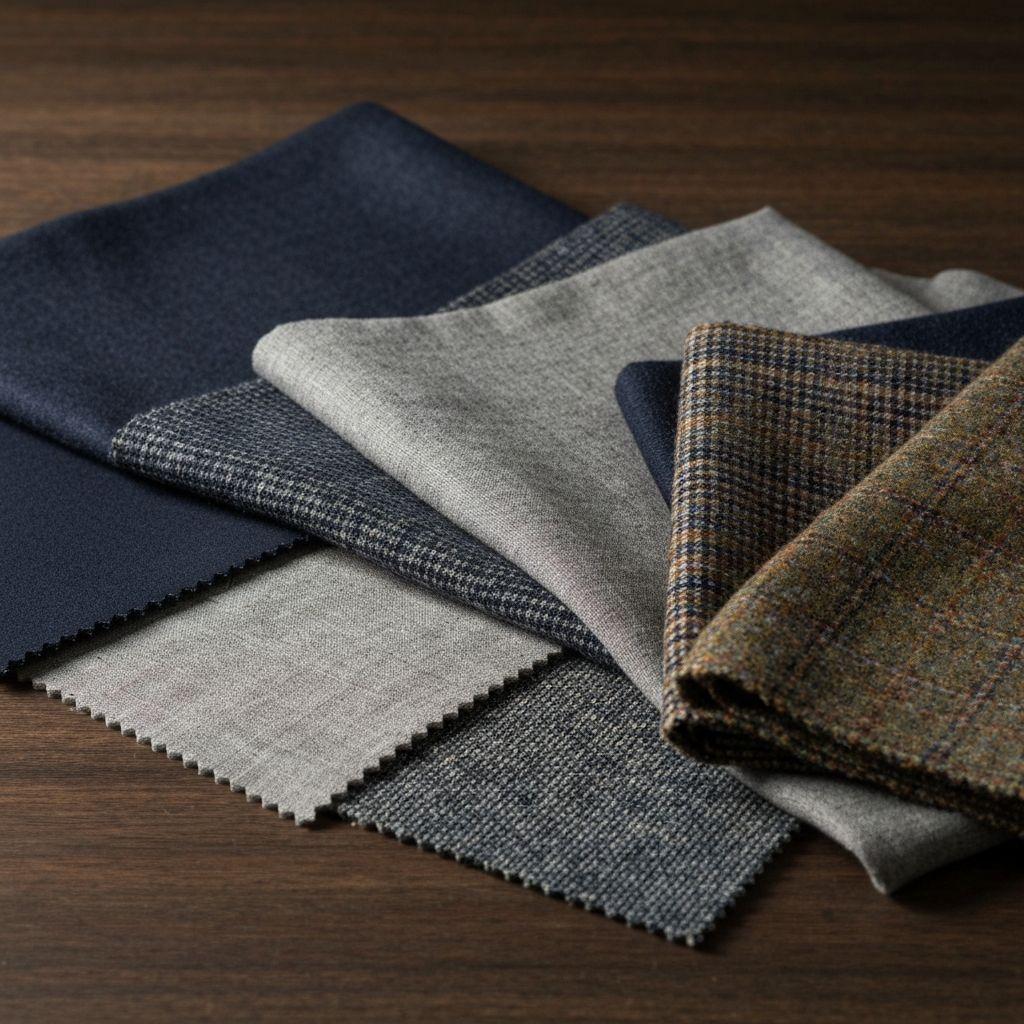
A three-piece suit is not a suit with an extra garment thrown in. It is a suit that can be worn three ways, and the waistcoat is the part that decides whether you actually get that flexibility. Most men who regret a three-piece did not regret the money. They regretted a waistcoat that rode up when they sat down, or a set that only ever left the wardrobe for one photographs session.
Here is what to think about before you commit to one.
When a waistcoat earns its keep
Count the occasions. If you wear a suit more than a handful of times a year, and some of those are weddings, registry ceremonies, speeches, or meeting a partner's parents, a waistcoat does real work. It keeps you dressed when the jacket comes off at a banquet, which is exactly the moment a shirt-and-belt look starts to feel underdressed.
If the suit exists for a single photo shoot, hire one or buy off the peg and spend the money on the suit you will wear weekly. A waistcoat you wear twice is an expensive accessory. A waistcoat you wear twenty times changes how you dress.
The length is the whole thing
The hem should cover the trouser waistband, standing and seated and reaching for something. If it lifts when you sit, it is too short, and no amount of tailoring at the sides will fix it, because the problem is the pattern, not the fit.
The V at the front does more for your proportions than the jacket does. Cut too deep and the body reads as two separate halves; cut too high and the chest looks pinched. The waist should be taken in just above the natural waist, so the last button closes flat, without strain and without a fold of cloth pulling across the back.
Ask for a higher-rise trouser and let the waistcoat cover the waistband. Braces become optional, the belt disappears, and the line runs from shoulder to shoe without interruption. The armhole matters as much as the length: a low, loose armhole drags the whole front of the garment upward the moment you raise an arm to shake hands or reach for a glass.
Single-breasted or double-breasted
A single-breasted waistcoat, five or six buttons, with a deeper V, is the easier garment. It slims, it works with almost any jacket, and it can be worn alone with trousers on a hot day without looking like a costume.
Double-breasted covers more of the chest, reads as a solid panel, and suits formal occasions and weddings particularly well. It is also less forgiving. Take the waist in too much and it pushes against you when you sit; set the button stance a centimetre off and the lapels of the waistcoat fight the lapels of the jacket.
For a first commission, single-breasted. If you already own a good two-piece, the second suit is the place to try double-breasted, when you know how you sit, stand and move in tailored clothes.
Same cloth, or something else
Matching cloth is the formal answer, and the correct one for a wedding. The same bolt, the same dye lot, so the waistcoat and jacket read as one object under any light. The cost is attrition: when that bolt is gone it is gone, and a waistcoat cut two years later will be close, never identical.
A different cloth is a legitimate second option, not a compromise, provided you choose it deliberately. A flannel waistcoat under a worsted jacket is a winter look with texture in it. What does not work is an almost-match: a grey that is nearly the same grey reads as a mistake rather than a decision.
Weddings and formal occasions
For a groom, keep the waistcoat in the suit's own cloth, in the same shade or a shade deeper, never lighter than the jacket. An evening reception with a double-breasted waistcoat and a bow tie sits close to black tie without pretending to be it; an afternoon garden ceremony takes a single-breasted waistcoat and braces quite happily.
One rule that survives every revival: leave the bottom button undone. It is not a style quirk, it is what allows the garment to sit flat when you move.
Hong Kong heat, honestly
In a Hong Kong summer the waistcoat is best understood as a separate top, not as insulation. A tropical wool at 250 to 280 grams, unlined or half-lined, worn over a shirt with trousers in an air-conditioned office, is cooler than a long-sleeved shirt under a jacket, because you have removed a layer rather than added one.
The back is where the heat lives. Waistcoat backs are usually cut in silk or a cupro lining so the garment slides over the shirt, and that panel, not the front, decides whether you are comfortable at 3pm. Ask what the back is made of before you ask what it costs. On the hottest weeks, a waistcoat in a linen-blend or a fresco cloth, worn alone, is a reasonable substitute for a jacket entirely.
What to ask beyond the price
A three-piece adds a variable to the fitting sequence: the waistcoat has its own length, armhole and waist position, and all three get adjusted at the same appointments as the jacket. Try the waistcoat at the first baste, not at the final, because a hem that is wrong by two centimetres means the whole front has to be recut.
Ask how many fittings are included, whether there is adjustment allowance at the side seams, and whether the back panel can be let out later. These are the questions that decide whether the garment still fits in three years, and they cost nothing to ask.
If you are commissioning a three-piece, start with our bespoke suits, look at tuxedos if the occasion is an evening one, and read the process so you know what each fitting is for. Book a fitting at our Tsim Sha Tsui atelier off Hankow Road: an hour, the cloth books open, and a conversation about where you will actually wear it before anyone cuts anything.